Design
A new wave of makers is designing for use, repair and the long, ordinary life of a home.
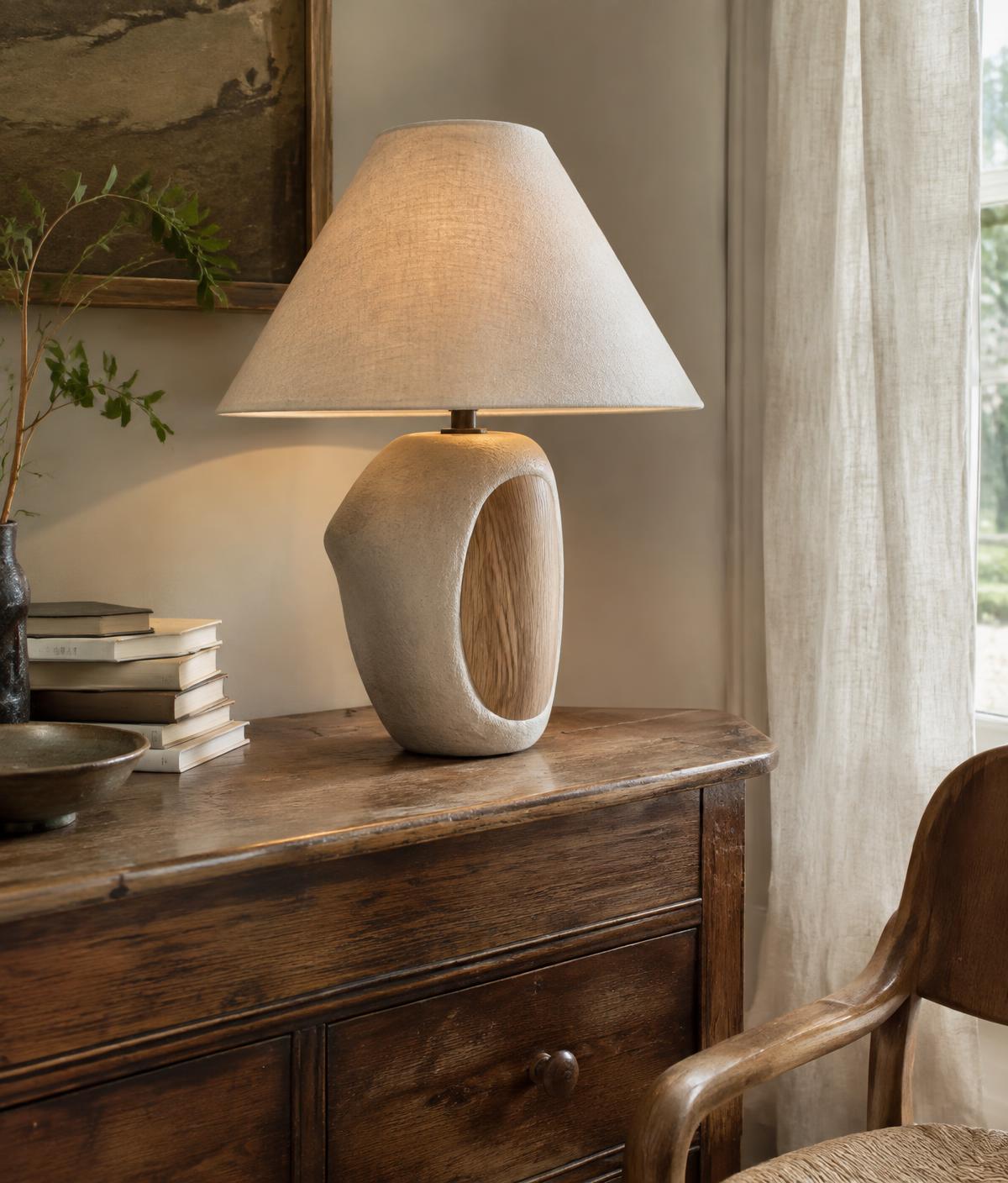
The lamp sits on an old oak sideboard, next to a stack of paperbacks and a branch in a dark vase. Its base is a pale stone form with a hollow worn through it like a pebble shaped by the sea, lined with a slip of warm oak. It is sculptural, certainly, but it is also a lamp: it switches on, it lights a corner, it can be carried to another room. For its maker, that second part matters more.
“I am suspicious of objects that only want to be looked at,” says Hana, a designer who works from a converted garage in Rotterdam. “A good object should make the day a little easier and the room a little calmer. Anything more is decoration.” Her pieces, lamps, trays, small shelves, are made in batches of twenty or thirty, from materials she can trace: local stone offcuts, oak from a single sawmill, linen woven two hours away.
Hana is part of a loose, international group of makers who are rethinking what it means to design for a home. They are not a movement with a manifesto so much as a shared temperament: a preference for fewer, better things; for objects that can be repaired rather than replaced; for beauty that comes from use rather than novelty. Many of them talk about ethics in ways that feel quietly rooted in faith, an idea of stewardship, of not taking more than you need.
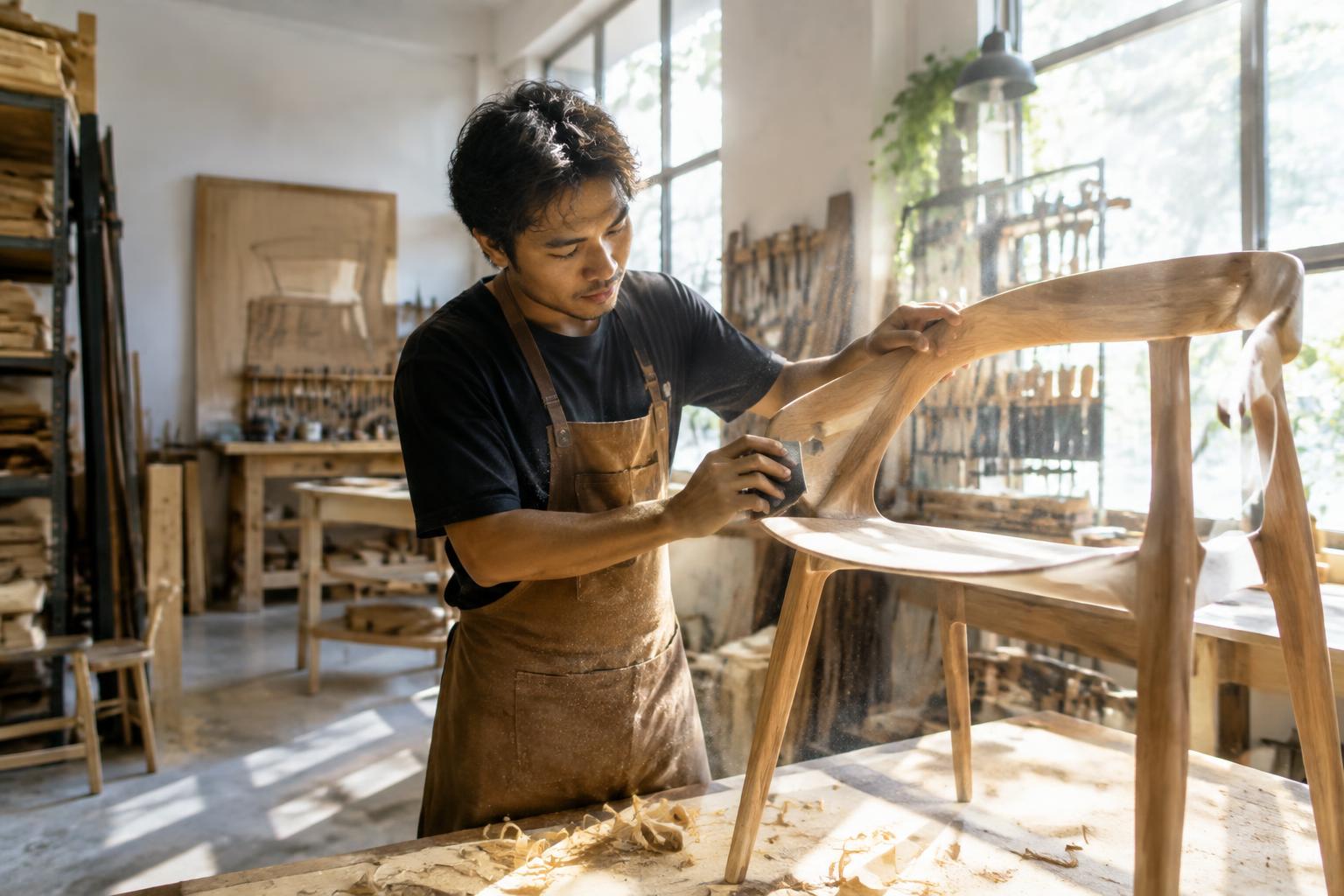
In a bright workshop outside Yogyakarta, Adi is sanding the curved back of a chair. The frame is made from reclaimed teak, the joints cut by hand so the chair can be taken apart and mended rather than thrown away. He learned the craft from an uncle who made furniture for mosques and schools, simple, sturdy pieces meant to last generations. “My uncle never signed anything,” Adi says. “He thought the chair should be good enough that nobody needed to know who made it.”
Adi does sign his work now, a small stamp on the underside, but he shares the principle. His chairs are designed around the body at rest: a slight tilt for conversation, arms low enough to sit cross-legged, a seat wide enough to share with a child. “A lot of design is made for photographs,” he says. “I design for long dinners.”
The phrase comes up again and again: designing for real life. For the kitchen table where homework, bills and meals overlap. For the guest room that doubles as a prayer space. For the small flat where every object has to justify its place. Kind design, in this sense, is not about softness but about attention: to how people actually live, how families gather, how rooms change through a day.
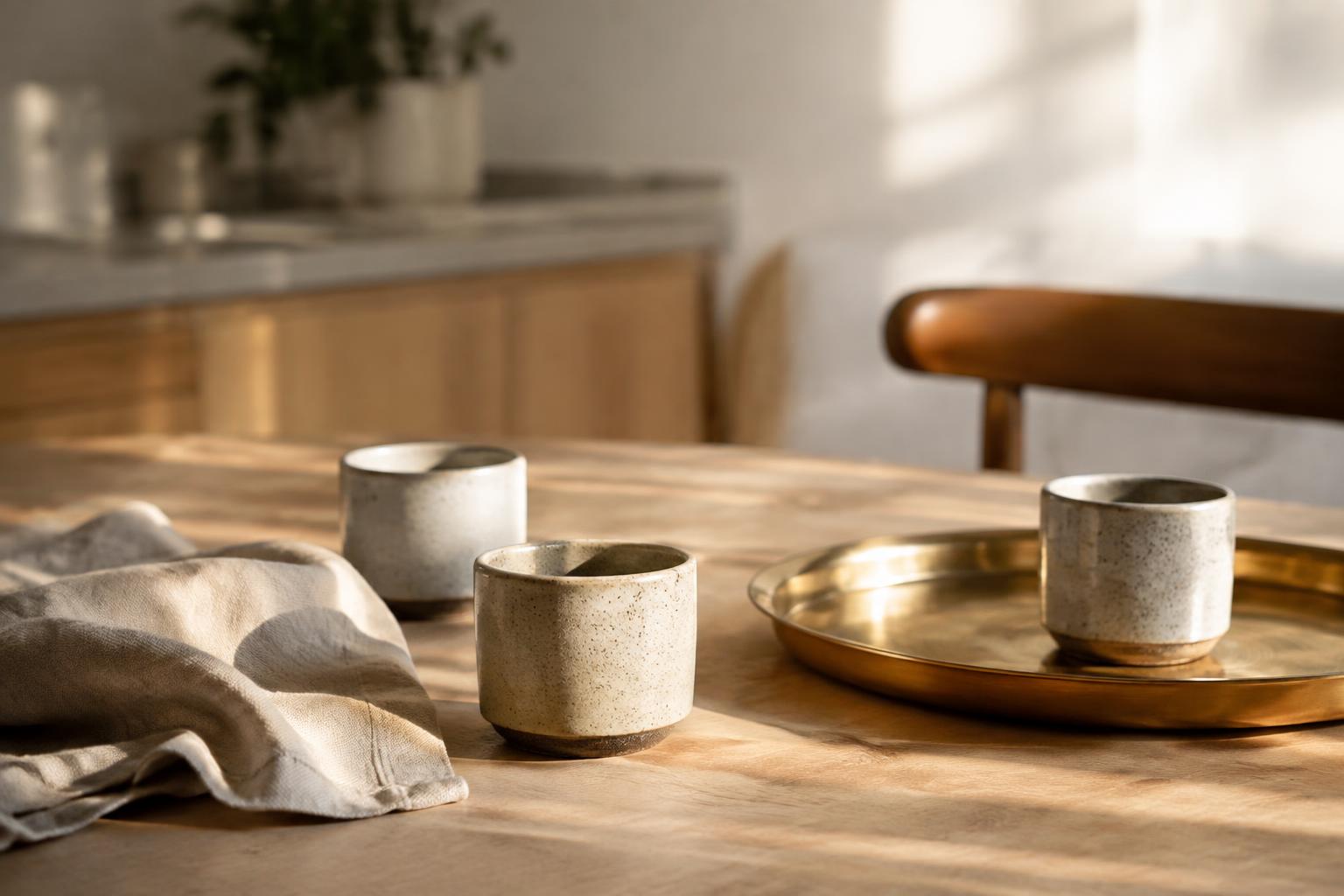
Materials are part of the kindness. Stoneware cups that feel good in cold hands. A brass tray that darkens gracefully with use. Linen that gets softer every wash. Hana calls these “objects that improve with you.” She shows me a tray she has used for six years, its surface scratched and warm. “When I made it, it was finished. Now it is complete. There is a difference.”
None of these makers claim to have solved anything. They know their work costs more than mass-produced furniture, and that access is a real question. Several run repair days or open workshops where people can learn to mend their own things. “The kindest object,” Adi says, “might be the one you already own and decide to fix.” Then he goes back to sanding, a thin cloud of teak dust drifting through the afternoon light.