Art
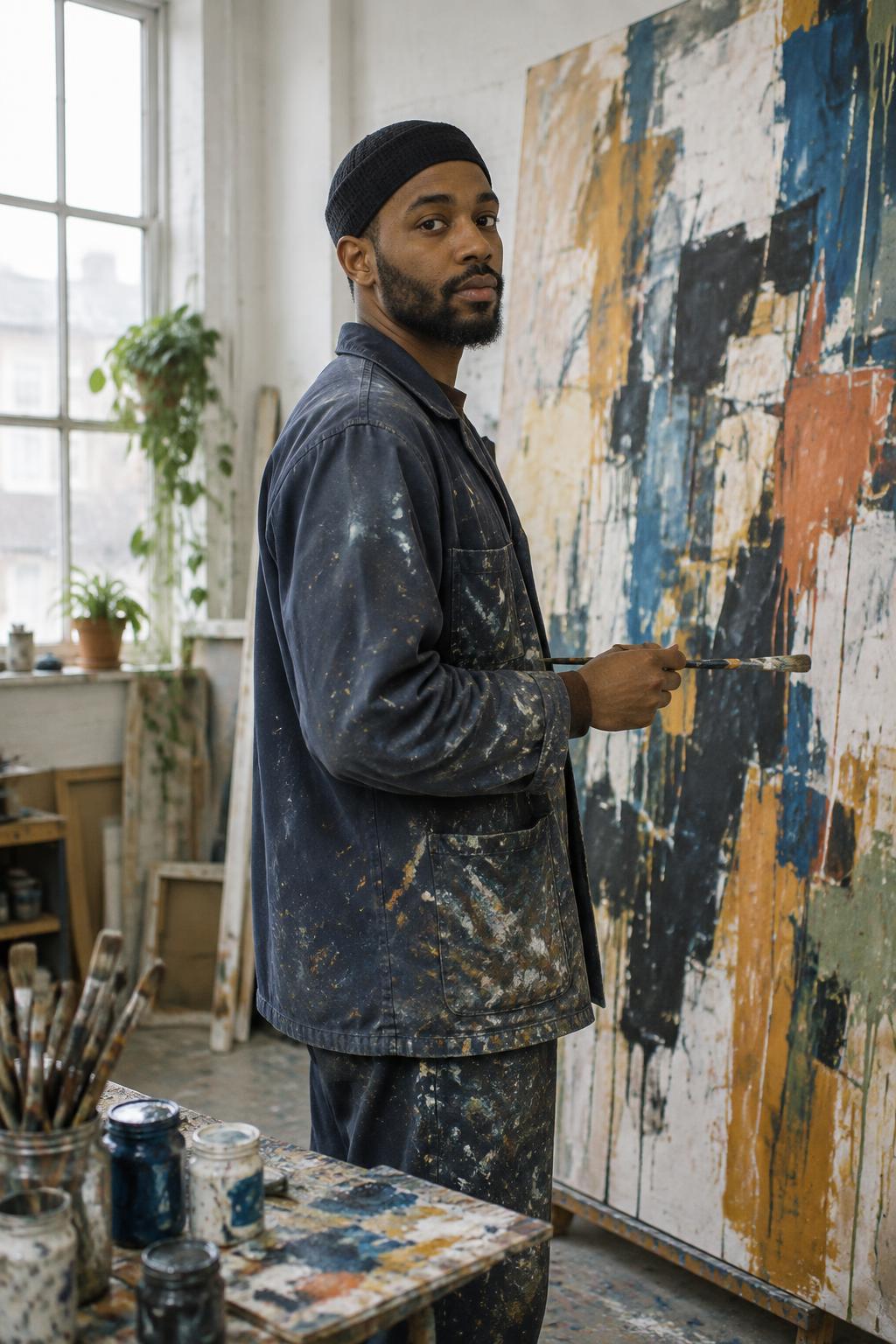
In a daylight studio in east London, a painter is making abstraction feel like company.
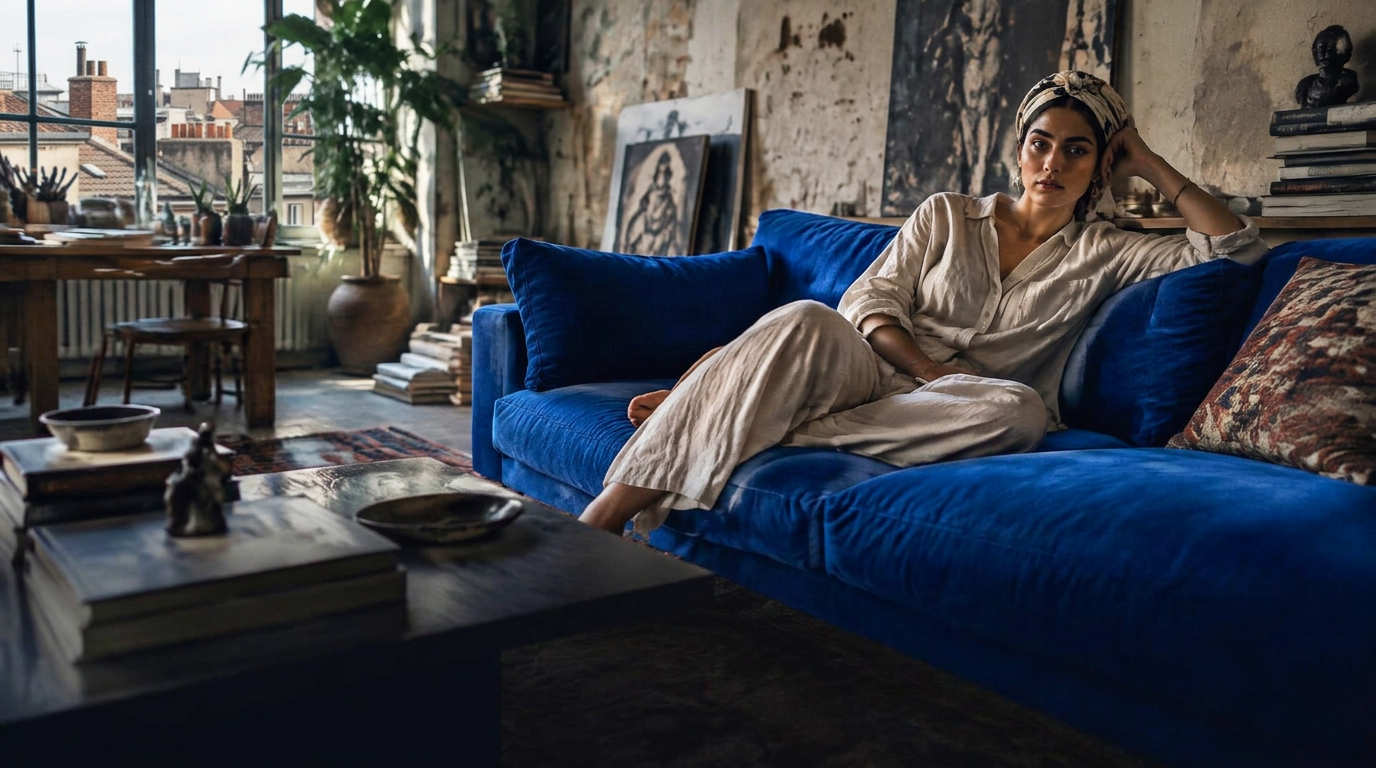
Idris arrives at his studio before most of the street is awake. The building used to be a garment workshop; the floors still carry a faint grid where sewing machines once stood. Now the long room holds canvases taller than he is, leaning against the whitewashed walls in various states of becoming. He makes tea, opens the tall windows, and waits for the light to settle before he picks up a brush. “The morning tells me what colour the day is,” he says.
His paintings are abstract, built from blocks and drifts of cobalt, ochre, rust and bone white. From a distance they look almost architectural. Up close, they are full of hesitations: places where paint has been scraped back, lines that change their minds, patches that have clearly been argued over. He likes that you can see the thinking. “A lot of abstraction feels cold to people, like it is keeping them out,” he says. “I want the opposite. I want it to feel like somebody was here.”
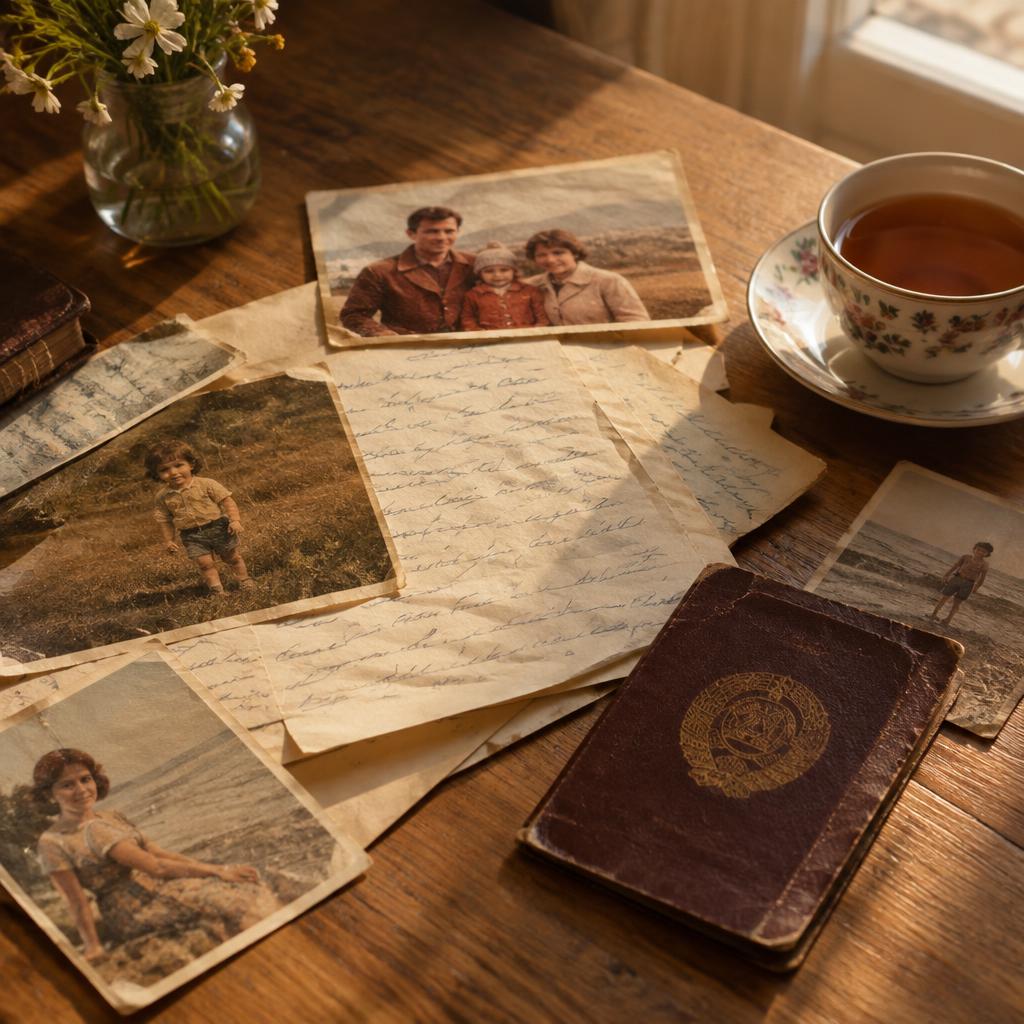
Idris came to painting sideways. He studied engineering, worked for three years designing ventilation systems, and painted at night in the kitchen of a shared flat. It was his father, a retired bus driver who had once wanted to be a calligrapher, who pushed him to take it seriously. “He told me that he spent his whole life drawing letters in the margins of timetables. He did not want me to do the same with my life.”
That inheritance shows. Although there is no script in his work, there is a rhythm that feels close to writing: repeated gestures, a sense of line moving across a surface with intent. He talks about the discipline of the pen that his father practised, the idea that a single stroke should carry both control and breath. “I am not trying to make Islamic art, whatever that label means to a gallery,” he says. “But the values I grew up with, patience, balance, humility, they are in how I work.”
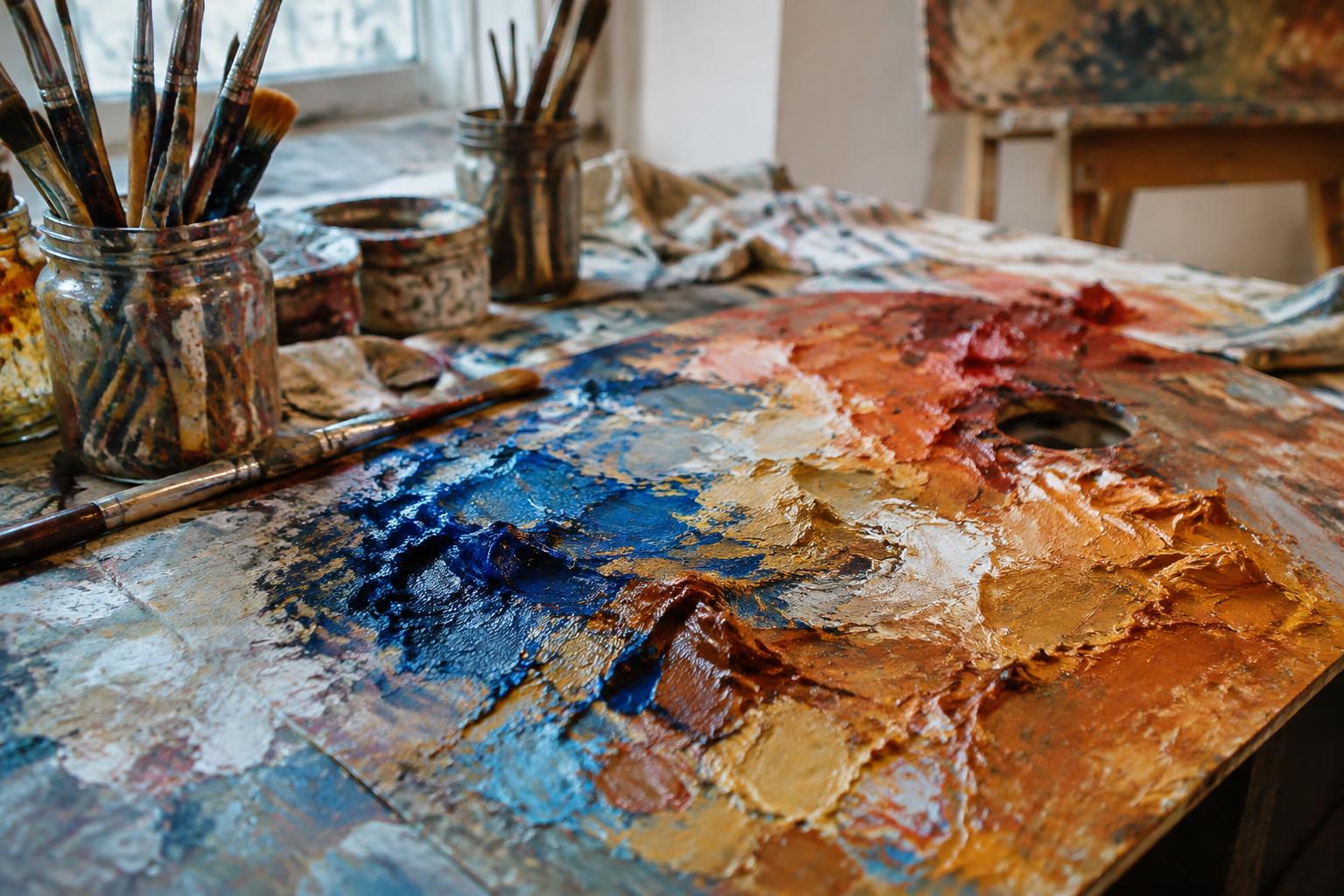
His table is a landscape of its own: jars of brushes, tins of pigment, a palette board so thick with dried paint it has become a relief sculpture. He mixes colour slowly, testing it against scraps of card pinned to the wall. Blue is the colour he returns to most. “It is the colour of distance, and of the sea my parents crossed,” he says. “But it is also just a beautiful blue. I do not always need it to mean something.”
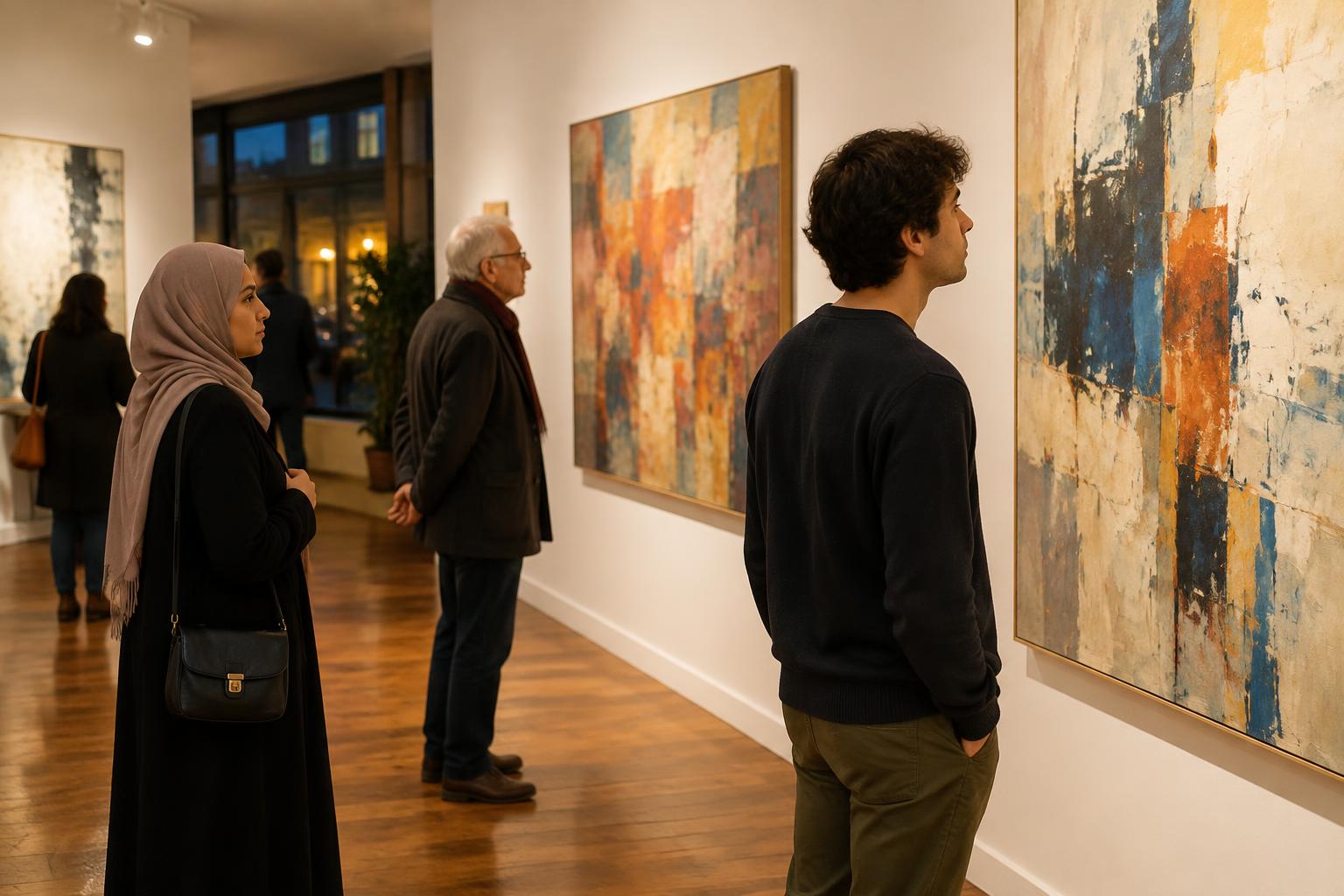
Last spring, Idris showed a series of twelve paintings in a small community gallery two streets away. He insisted on a free opening with no guest list. Neighbours came, and so did aunties from the local mosque, teenagers from the youth centre, a retired art teacher who stayed for three hours. Some people told him the paintings reminded them of maps. One woman said they reminded her of her mother's kitchen. He considers both readings correct.
The art world does not always make room for that kind of openness. Idris is candid about the pressure to be legible, to explain his identity in wall texts, to package himself as a story. He resists it gently. “I am happy to talk about where I come from. I am less happy to be told that is all the work is about.” What he wants is simpler and, perhaps, harder. “I want someone to stand in front of a painting and feel less alone. That is the whole job.”
As the afternoon light shifts, he steps back from the largest canvas and looks at it for a long time without speaking. Then he adds one short stroke of orange near the lower edge, puts the brush down and smiles. “There,” he says. “Now it is breathing.”